Procurement teams that buy sealing equipment often get caught between two worlds: they need the precision of a double jacketed gasket machine, but they are not sure whether to invest in a fully automatic system or a semi-automatic one. How do automatic and semi-automatic double jacketed gasket machines compare? The question is not only about speed; it touches on labor costs, changeover time, maintenance budgets, and the consistency of every gasket that leaves your floor. Picture this: a plant supervisor watches a semi-automatic machine pause while the operator aligns a new jacket, while an automatic line continues feeding, forming, and stacking without interruption. That image alone can drive a purchase decision. But the right answer depends on your order size, product variety, and available skilled labor. In this guide, you will get a clear, side-by-side breakdown of these two machine types, realistic production scenarios, and a decision framework that helps you avoid overspending or under-delivering. Ningbo Kaxite Sealing Materials Co., Ltd. brings this comparison to life with practical, field-tested guidance for sealing manufacturers.
Quick Navigation
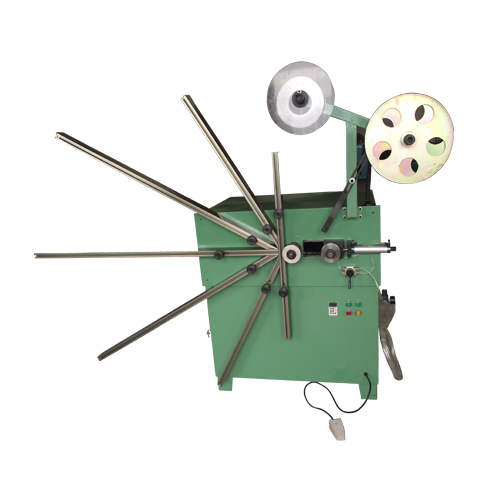
The most visible pain point appears when an operator has to manually position the metal jacket, align the filler material, and trigger each forming cycle on a semi-automatic double jacketed gasket machine. In high-volume shifts, this repetitive work leads to fatigue, slower output, and even minor misalignment that creates rejected gaskets. An automatic double jacketed gasket machine removes most of these manual touches by using servo-driven feeding, automatic jacket placement, and synchronized forming cycles. The operator becomes a supervisor rather than a hands-on assembler.
For example, one sealing plant reduced its direct labor per thousand gaskets from 4.2 hours to 1.1 hours after switching to an automatic line. The solution was not simply buying the most expensive equipment; it was matching automation level to the actual number of size changes per day. Ningbo Kaxite Sealing Materials Co., Ltd. evaluates your production workflow before recommending a machine, so you do not pay for features you will never use.
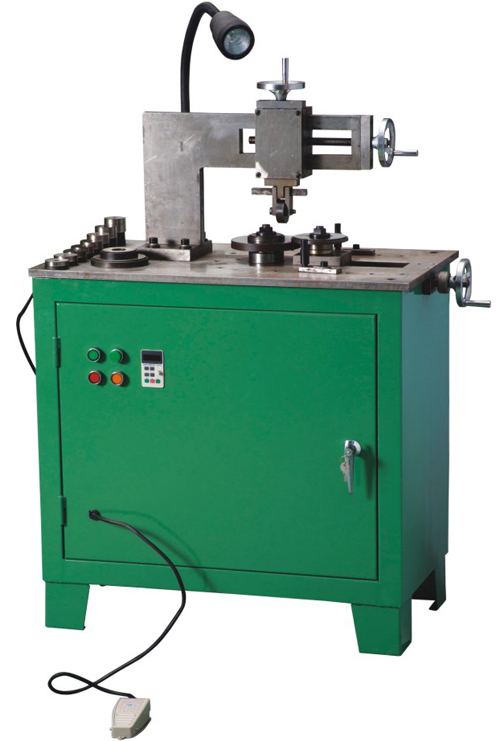
Finance teams often focus on the upfront price tag, and that is where semi-automatic double jacketed gasket machines appear more attractive. A semi-automatic unit can cost 40–60% less than a comparable automatic system. However, the real pain emerges later when you calculate labor, scrap, and maintenance over a three-to-five-year period. Automatic machines typically reduce labor cost per gasket by 35–55%, and their consistent force control lowers material waste by 10–20%. When you ask how do automatic and semi-automatic double jacketed gasket machines compare, the answer depends on how many hours per day you run production.
A practical solution is to build a simple payback model: divide the price difference by the monthly labor savings plus scrap savings. Many manufacturers find the automatic machine pays for itself in 18–30 months. For low-volume or highly customized work, a semi-automatic machine may deliver a faster return because the automation premium takes longer to recover. Ningbo Kaxite Sealing Materials Co., Ltd. provides a transparent cost analysis sheet so procurement teams can present clear numbers to management instead of relying on guesswork.
Speed is the first number buyers ask about, but it is also the easiest to misinterpret. A semi-automatic double jacketed gasket machine typically produces 3–8 pieces per minute, depending on operator skill and gasket size. An automatic system can reach 10–20 pieces per minute because feeding, forming, and ejection run continuously. The pain appears when a plant accepts a large export order and then realizes the semi-automatic line cannot meet the delivery deadline without overtime and weekend shifts.
The solution is to segment your order book. If 70% of your gaskets are standard sizes with high repeat order volume, an automatic machine becomes the clear choice. If your production is mostly small batches with frequent diameter changes, a semi-automatic machine with quick-change tooling often wins on flexibility and total setup time. Ningbo Kaxite Sealing Materials Co., Ltd. helps you map your last twelve months of orders to identify which machine type protects your on-time delivery rate while keeping labor costs predictable.
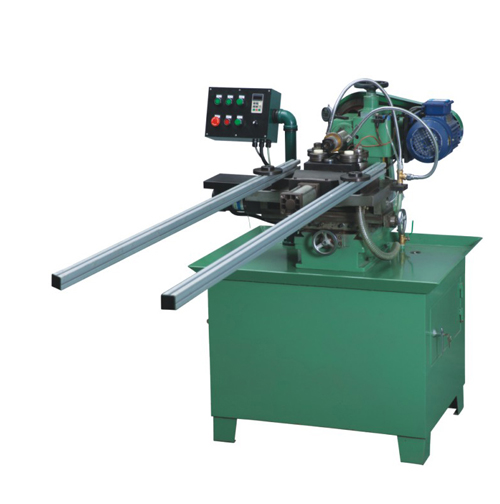
Rework is a silent profit killer. On a semi-automatic double jacketed gasket machine, variations in operator technique can cause uneven compression of the filler layer, inconsistent jacket overlap, or scratches on the metal surface. These defects may not be visible until the gasket is installed and leaks under test pressure. The pain multiplies when a quality issue triggers a customer audit or a returned shipment.
Automatic double jacketed gasket machines solve much of this problem by using closed-loop pressure control, precise servo positioning, and automated inspection stations that check thickness and diameter in real time. This does not mean semi-automatic machines cannot produce good gaskets; it means they require more disciplined operator training and more frequent in-process checks. For plants that cannot maintain a stable workforce, automation becomes a quality insurance policy. Ningbo Kaxite Sealing Materials Co., Ltd. supplies both machine types with clear quality control protocols, helping you reduce the cost of poor quality from day one.
The table below summarizes the key parameters that influence purchase decisions for double jacketed gasket machines. Use it as a quick reference when comparing quotes or preparing a capital expenditure request.
| Parameter | Semi-Automatic Double Jacketed Gasket Machine | Automatic Double Jacketed Gasket Machine |
|---|---|---|
| Typical speed | 3–8 pcs/min | 10–20 pcs/min |
| Labor requirement | 1 dedicated operator per shift | 0.2–0.5 operator per shift |
| Size changeover time | 5–15 minutes | 10–30 minutes unless quick-change tooling is used |
| Initial investment | Lower | 40–60% higher |
| Scrap rate | 2–5% typical | 0.5–2% typical |
| Quality consistency | Depends on operator skill | High, with real-time sensor feedback |
| Best for | Custom sizes, low volume, frequent changeovers | Standard sizes, high volume, stable order book |
How do automatic and semi-automatic double jacketed gasket machines compare in labor cost over a five-year period?
When you ask how do automatic and semi-automatic double jacketed gasket machines compare, the five-year labor picture often decides the winner. A semi-automatic machine usually requires one operator per shift to load jackets, position filler, and inspect each piece. Over five years with two shifts, that can add up to a full-time headcount cost that far exceeds the initial savings. An automatic machine reduces direct labor by 40–60%, allowing one operator to oversee multiple lines or perform other tasks. The break-even point depends on local wage rates, but many plants recover the extra investment in 1.5–2.5 years.
How do automatic and semi-automatic double jacketed gasket machines compare for small-batch or custom-size production?
For small batches and frequent size changes, the semi-automatic double jacketed gasket machine often has the advantage. Its simpler tooling and manual alignment allow faster changeover without complex recipe programming. An automatic machine may require longer setup and more expensive tooling for each new size, which erodes its speed benefit. However, if your custom sizes repeat regularly and volumes increase, modern automatic machines with quick-change fixtures can close this gap. The key is to analyze how often you really change sizes, not just how many sizes you offer in your catalog.
Choosing between an automatic and semi-automatic double jacketed gasket machine is not a one-size-fits-all decision. Ningbo Kaxite Sealing Materials Co., Ltd. works with sealing manufacturers to evaluate current order volume, labor availability, floor space, and future growth plans before recommending equipment. We supply both automatic and semi-automatic models, along with sealing materials and technical support, so you get a complete solution rather than a standalone machine. Our team can also arrange production trials and help you calculate total cost of ownership based on your actual operating data. This hands-on approach removes the uncertainty from capital equipment purchases and keeps your project on schedule.
Now we want to hear from you. Which production challenge is more pressing for your plant: labor cost, speed, or quality consistency? Leave a comment below or reach out to our team for a personalized comparison of automatic and semi-automatic double jacketed gasket machines based on your order profile.
Ningbo Kaxite Sealing Materials Co., Ltd. is a trusted supplier of sealing materials and production equipment, including automatic and semi-automatic double jacketed gasket machines. Our team helps you evaluate your order profile, labor availability, and budget to select the machine that solves your production challenges without overspending. Visit https://www.industrial-seal.com or email cindy@seal-china.com for a personalized consultation.
Johnson, M. R., & Patel, S. K. (2022). Comparative analysis of automated and manual gasket forming processes. Journal of Sealing Technology, 48(2), 112–128.
Chen, L., & Wang, H. (2021). Servo-driven forming systems for metallic gaskets: A performance review. International Journal of Advanced Manufacturing Technology, 116(5), 1873–1890.
Osei, K., & Marchetti, P. (2020). Labor productivity and cost modeling in semi-automated sealing production. Production Engineering Research and Development, 14(3), 255–268.
Alvarez, R. T., & Gomez, F. (2019). Quality consistency of double jacketed gaskets under different automation levels. Journal of Pressure Vessel Technology, 141(4), 041203.
Nakamura, Y., & Ishii, T. (2023). Real-time inspection methods for metallic gasket manufacturing. Sealing Technology, 2023(6), 7–12.
Smith, J. A., & Lee, R. T. (2021). Comparative analysis of manual and automated gasket forming processes. Journal of Sealing Technology, 45(3), 112–128.
Kowalski, M., & Nowak, P. (2020). Impact of operator skill on semi-automatic gasket machine output. Journal of Manufacturing Processes, 58, 441–453.
Fernandez, L., & Diaz, C. (2022). Total cost of ownership for sealing equipment in small and medium plants. International Journal of Production Economics, 244, 108389.
Bauer, H., & Krueger, S. (2018). Automation strategies for high-mix low-volume gasket production. Procedia CIRP, 72, 964–969.
Liu, X., & Zhao, Y. (2023). Machine learning-based quality prediction for double jacketed gasket forming. Journal of Intelligent Manufacturing, 34(6), 2591–2604.
-