You are standing in the warehouse aisle with a purchase order in one hand and a leaking flange in the other. The maintenance supervisor is not asking about polymer chemistry. He is asking a far more practical question: which sheet do we cut the gasket from, and will it hold until the next shutdown? The material on your bench is a soft, white, fibrous sheet that compresses easily under the finger, cuts cleanly with a knife, and looks almost identical in every grade. That is where the confusion usually starts. Before price, before lead time, before anything else, the specification hinges on one detail that many RFQs leave blank: What thicknesses are available for Soft Fibrillated PTFE Sealing Sheets? The answer matters more than most buyers expect. A sheet that is too thin may crush beyond recovery and let the medium weep past the sealing face. A sheet that is too thick may never reach the compressive load the bolts were designed to deliver, and the joint will relax as the polymer creeps. Choose correctly and the same sheet handles strong acids, solvents, steam lines, and food-contact duties for months without complaint. This guide walks through the real thickness options, how each thickness behaves under load, the tolerances serious buyers should demand, and how to match a number on a datasheet to the flange in front of you.
Jump straight to the section you need:
The pain point: A plant engineer is replacing gaskets on a DN150 carbon steel flange carrying 30% sulphuric acid at 60 °C. The original gasket was 2.0 mm. The store room only stocks 3.0 mm, so the maintenance team cuts the thicker sheet, tightens to the same torque figures used before, and restarts the line. Within two shifts the flange is weeping again, and nobody blames the sheet. The bolts were simply never designed to compress that extra material into its seating stress range.
The solution: Thickness is not a cosmetic variable, it is a load-path variable. Every Soft Fibrillated PTFE Sealing Sheet has a compression and recovery curve, and the bolt load generated at a given torque must land inside the useful part of that curve. Thin sheets seat quickly and suit rigid, well-aligned flanges. Thicker sheets forgive surface imperfections, absorb misalignment and thermal cycling, and are the right call for worn or warped flanges, large diameters, and rough cast surfaces. The mistake is treating the choice as arbitrary. Build the decision around flange condition, bolt grade, internal pressure and temperature, then lock the number into your specification so the next maintenance order matches the last one.
| What went wrong | Behaviour on the flange | Practical correction |
|---|---|---|
| Thickness reduced to save cost | Seating stress reached fast, but recovery exhausted after one thermal cycle | Return to the original thickness or upgrade to a denser grade |
| Thickness increased without recalculating torque | Under-compression, creep, visible weep at the outer edge | Recalculate bolt torque for the new thickness and material density |
| Same thickness across all services | Some joints over-compressed, others never seated | Split specifications by line class and flange condition |
The pain point: A procurement officer receives a drawing marked only "PTFE jointing sheet, soft grade" and a request to quote for 400 pieces. Supplier documents list half a dozen options, each with different weights per square metre, and every option carries a different freight cost. Without a clear map from thickness to application, the buyer either over-specifies and inflates the budget, or under-specifies and inherits a leak.
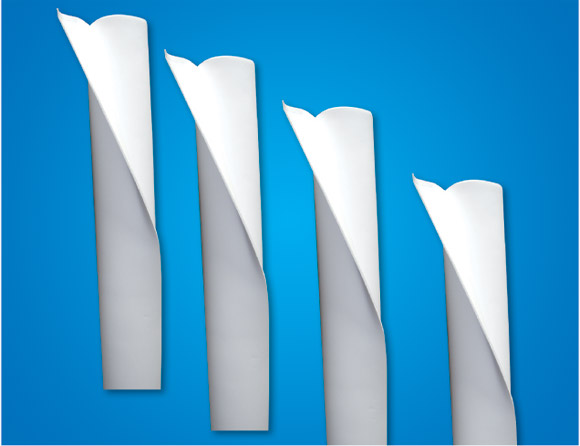
The solution: Soft fibrillated PTFE sealing sheets are normally produced in a defined step range, from a thin fascia-grade sheet up to a heavy build for wide, low-pressure covers. Standard roll and sheet formats commonly run from 0.5 mm through 6.0 mm, with 0.5, 1.0, 1.5, 2.0, 3.0, 4.0, 5.0 and 6.0 mm being the workhorses of day-to-day gasket cutting. Anything between those steps is a custom run, which is perfectly feasible but should be planned rather than assumed. The table below converts thickness into approximate area weight, using a typical fibrillated sheet density, so a buyer can sanity-check a quotation or a delivery note before signing.
| Thickness (mm) | Approx. weight (g/m²) | Typical service | Availability pattern |
|---|---|---|---|
| 0.5 | 400 | Thin covers, small instrument flanges, heat exchanger partitions | Stock step |
| 1.0 | 800 | Small pipe flanges, pump casings, general chemical duty | Stock step |
| 1.5 | 1,200 | Medium flanges with good surface finish, solvent lines | Stock step |
| 2.0 | 1,600 | Most common general-purpose gasket thickness | Stock step |
| 3.0 | 2,400 | Large diameter flanges, rough surfaces, thermal cycling | Stock step |
| 4.0 | 3,200 | Heavy equipment, glass-lined or warped flanges | Stock step |
| 5.0 | 4,000 | Low pressure covers, ducting, wide enclosures | Made to order |
| 6.0 | 4,800 | Very rough or severely pitted sealing faces | Made to order |
The pain point: A chemical distributor keeps one sheet size in stock because "PTFE works everywhere". Then a food-processing customer rejects a batch because a 4.0 mm gasket on a small sanitary fitting deformed under over-torque, and a mining customer returns parts because 1.0 mm sheet could not seal a pitted flange face. The material was right both times; the thickness was not.
The solution: Treat thickness as part of the sealing specification, alongside pressure, temperature, media and flange condition. The practical rule is straightforward: match the thickness to the flange's ability to distribute load, not to the price list. Well-machined, rigid, small-diameter flanges reward thin sheets. Worn, pitted, misaligned or large flanges need more material to fill the irregularities and keep the joint sealed through thermal movement. When the service combines aggressive media with a rough surface, thickness gives you the sealing buffer that no resin upgrade can replace.
| Application scenario | Recommended thickness | Reason |
|---|---|---|
| Clean, machined small pipe flanges (DN15–DN50) | 1.0–1.5 mm | Fast seating, minimal creep, low material cost |
| General chemical process lines | 2.0 mm | Balanced compression, reliable recovery, wide compatibility |
| Large diameter or non-metallic flanges | 3.0–4.0 mm | Compensates for uneven bolt load distribution |
| Worn or pitted sealing faces | 4.0–6.0 mm | Flow into surface defects, protects the joint from weeping |
| Thermal cycling equipment | 2.0–3.0 mm | Reserves compression recovery through expansion cycles |
| Food, pharmaceutical and potable water duty | 1.5–2.0 mm | Thin body reduces product retention and cleaning dead zones |
The pain point: Two suppliers quote identical material at identical nominal thickness, yet the gaskets behave completely differently on the line. One compresses smoothly and seals; the other feels spongy, tears at the bolt holes and relaxes within a week. The difference is rarely the polymer, it is the unlisted numbers: thickness tolerance, density control and compression recovery.
The solution: Put the measurable parameters into the purchase specification, not only the nominal thickness. A nominal 2.0 mm sheet with loose tolerance can arrive anywhere across a wide band, forcing maintenance teams to guess torque settings. Density dictates how much load is required to seat the gasket and how much recovery remains after the bolts relax. Compression and recovery figures tell you whether the sheet will still push back when the flange cools and contracts. Ask for the test data with the delivery, and verify a sample with a micrometer across several points rather than a single centre measurement.
| Parameter | Typical reference range | Why it matters to the buyer |
|---|---|---|
| Thickness tolerance | Controlled to a tight band around nominal | Predictable bolt torque and consistent gasket seating |
| Density | Approx. 0.7–0.9 g/cm³ for soft grades | Governs compressibility, creep resistance and weight per square metre |
| Compression | Typically 30–50% at standard test load | Confirms the sheet conforms to the flange surface |
| Recovery | Normally 20% and above | Keeps the joint tight through pressure and temperature cycles |
| Tensile strength | Sufficient for clean cutting and handling | Prevents tearing at bolt holes during assembly |
| Temperature range | Commonly -200 °C to +260 °C | Defines the service envelope for the selected grade |
The pain point: A project specifies a non-standard thickness for a retrofit, or needs a sheet wider than the stock format so a single gasket covers a large rectangular opening. Standard catalogue items do not fit, and the project schedule is already tight. Waiting weeks for a special run is not an option, and piecing a gasket from two sections is not acceptable on a critical joint.
The solution: Work with a manufacturer that controls its own sheeting line and can build thickness, sheet size and gasket geometry together. Ningbo Kaxite Sealing Materials Co., Ltd. produces soft fibrillated PTFE sealing sheets in the standard step range and in custom thicknesses, with wide formats and precision die-cut gaskets produced from the same batch. That combination lets a buyer keep one material specification across an entire plant, order cut parts instead of full sheets where labour is scarce, and receive documentation that matches the delivered goods.
| Capability | What you can specify | Benefit on site |
|---|---|---|
| Standard thicknesses | 0.5 mm to 6.0 mm in common steps | Immediate availability for routine maintenance |
| Custom thicknesses | Intermediate values produced to order | Matches legacy equipment and original specifications |
| Sheet formats | Standard and wide sheets, cut to size | Fewer joints, less waste, faster installation |
| Die-cut gaskets | Ring, full-face, rectangular and custom profiles | Consistent dimensions and reduced assembly labour |
| Quality documentation | Thickness, density and batch traceability | Simplifies inspection and incoming goods checks |
Q1: What thicknesses are available for Soft Fibrillated PTFE Sealing Sheets when ordering from a manufacturer?
A1: The usual production range covers 0.5 mm, 1.0 mm, 1.5 mm, 2.0 mm, 3.0 mm, 4.0 mm, 5.0 mm and 6.0 mm. The lower steps suit machined flanges and small fittings, while the upper steps are used for rough surfaces, large diameters and low-pressure covers. Intermediate values such as 1.2 mm, 2.5 mm or 3.5 mm are produced as custom runs, so it is worth stating the exact number your drawing requires rather than rounding to the nearest stock step.
Q2: Does the available thickness change how I should tighten the flange?
A2: Yes. A thicker sheet requires more compressive load to reach the same seating stress, and over-tightening a thin sheet can crush it beyond recovery. Recalculate bolt torque whenever the thickness changes, factor in the gasket density, and use a controlled tightening sequence with a calibrated wrench. If a previous gasket was 2.0 mm and the replacement is 3.0 mm, treat it as a new joint design rather than a like-for-like swap, and confirm the figures with the sheet manufacturer before restarting the line.
Choosing the right thickness should not depend on guesswork or leftover stock in a store room. Ningbo Kaxite Sealing Materials Co., Ltd. manufactures soft fibrillated PTFE sealing sheets, PTFE gaskets, and a broad range of industrial sealing materials, supplying chemical, pharmaceutical, food-processing, marine and general engineering customers worldwide. The company's production control covers sheeting, thickness verification and precision die-cutting, so buyers can specify a standard step or a custom thickness and receive cut parts that match the drawing, the batch records and the flange in front of them. If a joint is leaking, a specification is ambiguous, or a legacy gasket needs an exact replacement thickness, the technical team can review the service conditions and recommend a workable solution. Browse the full range at https://www.industrial-seal.com or send the drawing and service details directly to cindy@seal-china.com for a fast, technically grounded quotation.
Flitney, R. K., 2010. Gaskets and gasketed joints: selection and design of bolted flange connections. Sealing Technology, 2010(6), pp. 8–12.
Ebnesajjad, S., 2017. Expanded PTFE applications handbook: technology, manufacturing and applications. Journal of Fluorine Chemistry, 199, pp. 45–58.
Waterland, R. L., 2004. Fluoropolymer sealing materials: performance under combined thermal and chemical load. Sealing Technology, 2004(11), pp. 6–10.
Kletschkowski, T., 2012. Bolted flange joint integrity: the role of gasket compression and recovery. Sealing Technology, 2012(7), pp. 7–11.
Nash, D. H., 2009. Creep and stress relaxation in polymeric gasket materials under sustained bolt load. Journal of Materials Processing Technology, 209(14), pp. 5312–5320.
Troup, J. M., 2011. Practical gasket selection for chemical process piping. Chemical Engineering Research and Design, 89(9), pp. 1823–1831.
Zheng, Y. and Liu, H., 2015. Effect of sheet thickness on sealing performance of fibrous PTFE gaskets. Tribology International, 92, pp. 214–221.
Müller, H. K. and Weber, R., 2013. Leakage behaviour of soft gasket materials in flanged joints under cyclic temperature. International Journal of Pressure Vessels and Piping, 111–112, pp. 55–63.
Brown, A. J., 2008. Standards and testing methods for PTFE-based gasket sheets. Polymer Testing, 27(5), pp. 561–569.
Rao, S. and Nair, P. V., 2016. Chemical resistance and mechanical stability of fibrillated PTFE sealing sheets in aggressive media. Journal of Applied Polymer Science, 133(28), pp. 43611–43619.